
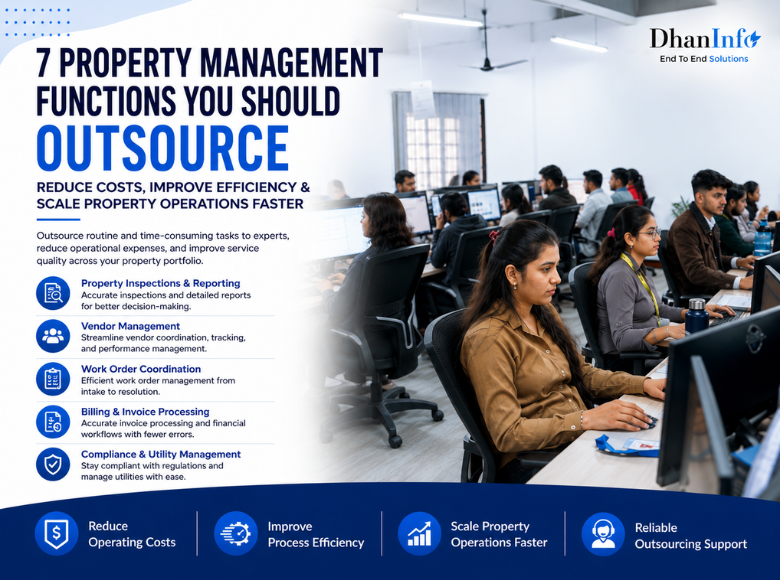
Managing residential, multifamily, and commercial properties requires balancing resident expectations, vendor relationships, regulatory compliance, maintenance requests, and financial operations. As property portfolios grow, administrative workloads often increase faster than internal teams can handle.
This is one reason why property management outsourcing has become a strategic solution for property management companies across the United States. Rather than hiring additional staff for every operational function, organizations are increasingly outsourcing specialized processes to improve efficiency, control costs, and support growth.
According to industry reports from organizations such as Deloitte, businesses continue to view outsourcing as a way to gain operational flexibility, access specialized expertise, and improve service delivery. For property management companies, outsourcing can help reduce administrative burdens while allowing internal teams to focus on tenant satisfaction, asset performance, and portfolio expansion.
The key is knowing which functions deliver the greatest value when outsourced.
What Is Property Management Outsourcing?
Property management outsourcing is the practice of delegating operational, administrative, and support functions to a specialized service provider.
These functions may include:
Property inspections
Vendor management
Work order coordination
Billing and invoicing
Compliance tracking
Damage assessment reporting
Utility service coordination
The goal is not to replace strategic property management. Instead, outsourcing allows internal teams to spend less time on repetitive administrative work and more time on activities that directly impact residents, property owners, and business growth.
The Best Rule: Outsource Routine, Retain Strategy
A simple framework used by many successful property management organizations is:
Keep In-House
Portfolio strategy
Investor and owner relationships
Leasing decisions
Asset management
Resident experience strategy
Outsource
Administrative workflows
Documentation processing
Vendor coordination
Reporting tasks
Compliance support
Billing functions
Inspection management
This approach allows organizations to maintain control of critical decisions while improving operational efficiency through outsourcing.
1. Property Inspections and Reporting
Property inspections are essential for maintaining asset quality, supporting compliance requirements, and identifying maintenance issues before they become expensive problems.
However, inspection reporting often involves:
Data collection
Documentation review
Image verification
Quality control checks
Report preparation
These tasks can consume significant time for internal teams.
Through property inspection outsourcing, property managers can streamline inspection workflows while ensuring reports remain accurate, consistent, and delivered on time.
For organizations managing large portfolios, outsourced property inspection reporting services can improve turnaround times while reducing administrative overhead.
2. Vendor Management and Coordination
Vendor relationships are critical to property operations, but managing multiple service providers can quickly become complex.
Responsibilities often include:
Vendor onboarding
Performance tracking
Scheduling
Documentation management
Communication follow-ups
Compliance verification
As portfolios expand, vendor coordination becomes increasingly resource-intensive.
This is why many property managers invest in vendor management outsourcing. Dedicated support teams can help manage day-to-day vendor interactions, reduce delays, and ensure work orders move through the process efficiently.
By outsourcing vendor coordination services, property managers can focus on strategic oversight rather than routine administrative tasks.
3. Work Order Management
Work orders are the backbone of maintenance operations.
When requests are delayed or poorly tracked, the result can be:
Resident dissatisfaction
Increased maintenance costs
Vendor confusion
Missed service-level expectations
Effective work order management requires:
Request intake
Task assignment
Status tracking
Vendor communication
Documentation updates
Resolution monitoring
Many organizations choose work order management outsourcing to improve consistency and reduce response times.
Dedicated support teams can manage work order workflows, helping ensure maintenance requests are tracked from initiation through completion.
For growing property portfolios, outsourced maintenance coordination services provide a scalable way to support operational performance without increasing internal headcount.
4. Billing and Invoice Processing
Financial accuracy plays a major role in successful property management operations.
Yet billing processes often involve repetitive administrative tasks such as:
Invoice collection
Data entry
Validation checks
Coding and categorization
Exception handling
Documentation management
Errors can create delays, impact cash flow, and increase administrative costs.
Through billing and invoicing outsourcing, property management companies can improve process efficiency while reducing manual workloads.
Outsourced invoice processing for property management helps organizations maintain consistent workflows and improve financial visibility without overburdening internal accounting teams.
5. Property Registration and Compliance Management
Regulatory requirements continue to evolve across U.S. markets.
Property managers must often track:
Registration requirements
Local ordinances
Compliance deadlines
Licensing documentation
Inspection records
Regulatory reporting
Failure to maintain compliance can result in penalties, delays, and operational risk.
Many firms utilize property compliance services to help manage documentation, reporting requirements, and ongoing compliance monitoring.
Outsourcing compliance-related workflows can reduce administrative pressure while improving accuracy and accountability across property operations.
6. Damage Assessment and Reporting
Property damage events require accurate documentation and timely reporting.
Whether dealing with maintenance issues, insurance-related incidents, or property preservation needs, teams often must:
Collect field information
Review documentation
Validate reports
Organize photographs
Prepare supporting records
These processes require consistency and attention to detail.
Damage assessment reporting services help property management organizations manage documentation workflows more efficiently while ensuring critical information is organized and accessible when needed.
This can be particularly valuable for organizations managing large residential, commercial, or REO portfolios.
7. Utility Service Coordination
Utility-related tasks are often overlooked, yet they consume significant operational resources.
Common responsibilities include:
Utility activations
Service transfers
Utility terminations
Account verification
Issue resolution
Exception management
As property portfolios grow, utility coordination becomes increasingly difficult to manage internally.
By utilizing utility coordination services, property management companies can streamline these processes while reducing administrative workloads.
Outsourced utility management support helps ensure utility-related tasks are handled efficiently without distracting internal teams from higher-value activities.
Why More U.S. Property Managers Are Turning to Outsourcing
Property management organizations face increasing pressure to deliver better service while controlling costs.
Common challenges include:
Labor shortages
Rising operational expenses
Growing compliance requirements
Expanding property portfolios
Increased resident expectations
Outsourcing addresses these challenges by providing access to specialized support teams and standardized operational processes.
Benefits often include:
Reduced administrative burden
Improved process consistency
Greater operational scalability
Faster turnaround times
Better resource allocation
Increased focus on resident and owner relationships
For many organizations, outsourcing becomes less about reducing costs alone and more about building sustainable, scalable operations.
How DhanInfo Supports Property Management Outsourcing
DhanInfo provides property management outsourcing services designed to help organizations improve operational efficiency while maintaining service quality.
The company’s support capabilities include:
Property Inspection & Quality Control Services
Vendor Management & Coordination
Property Registration & Compliance Services
Damage Assessment & Reporting
Billing & Invoicing Management
Utility Service Coordination
REO Processing Support
Single-Family Rental (SFR) Property Management Support
By combining process expertise, structured workflows, and quality-focused delivery, DhanInfo helps property management companies manage routine operational functions more effectively.
The result is improved visibility, reduced administrative workload, and greater operational flexibility.
Beyond Property Management: DhanInfo’s Broader Outsourcing Expertise
In addition to property management operations, DhanInfo supports organizations through a range of specialized outsourcing solutions, including:
This broader operational experience allows DhanInfo to support organizations with interconnected workflows that extend beyond property management alone.
FAQs
What is property management outsourcing?
Property management outsourcing involves delegating operational and administrative functions such as inspections, vendor management, billing, compliance tracking, and reporting to a specialized service provider.
Which property management functions are commonly outsourced?
The most commonly outsourced functions include property inspections, vendor coordination, work order management, billing and invoicing, compliance support, damage assessment reporting, and utility service coordination.
Does outsourcing reduce property management costs?
Outsourcing can help reduce operational costs by minimizing administrative workloads, improving process efficiency, and reducing the need for additional internal staffing.
Is outsourcing suitable for small property management companies?
Yes. Small and mid-sized property management firms often use outsourcing to access specialized expertise and scalable operational support without significantly increasing overhead.
How do I choose a property management outsourcing partner?
Look for a provider with industry experience, established workflows, quality control processes, scalability, and expertise in the specific functions you plan to outsource.
Conclusion
Successful property management depends on balancing operational efficiency with exceptional service delivery. As administrative workloads continue to increase, many U.S. property management companies are rethinking which functions truly need to remain in-house.
Property inspections, vendor management, work order coordination, billing, compliance tracking, damage assessment reporting, and utility service coordination are often strong candidates for outsourcing because they are process-driven, repetitive, and highly scalable.
By following the principle of outsourcing routine tasks while retaining strategic functions internally, organizations can reduce operational complexity, improve consistency, and create capacity for future growth.
For companies seeking a trusted property management outsourcing partner, DhanInfo provides specialized operational support designed to help property managers streamline workflows, improve service delivery, and scale efficiently.
Ready to Streamline Your Property Management Operations?
DhanInfo's property management outsourcing services help organizations improve efficiency, reduce administrative burdens, and support portfolio growth. Contact our team to learn how we can help optimize your property management workflows.
Contact Us