
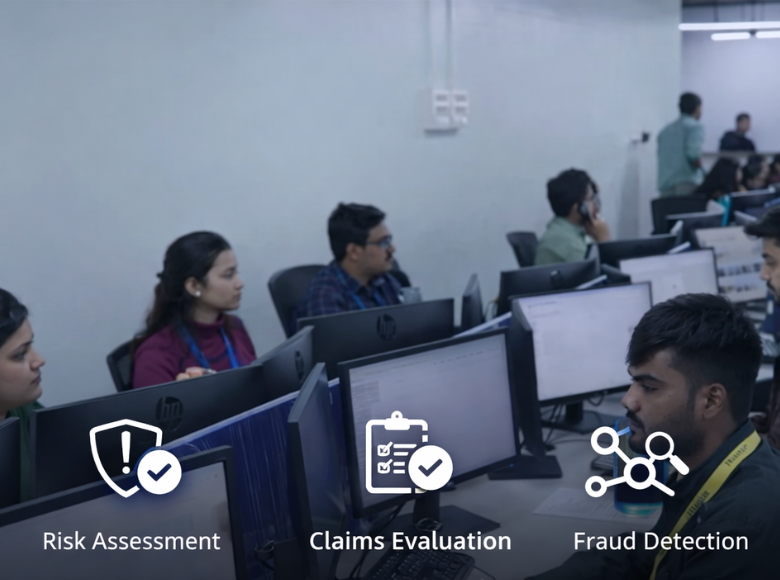
The insurance industry is evolving rapidly, driven by increasing data complexity, rising claim volumes, and changing risk patterns. What once relied on basic assessments has now become a highly structured, data-driven process.
For insurers, the ability to accurately assess and manage risk is directly tied to profitability, compliance, and long-term sustainability.
This is where Insurance Risk Analysis plays a critical role.
According to industry data, insurers that adopt advanced analytics and structured risk processes can reduce claim-related losses by up to 25% while improving underwriting accuracy. With the growing adoption of predictive analytics for insurance, companies are now able to move beyond reactive decision-making toward proactive risk management.
What is Insurance Risk Analysis?
Insurance Risk Analysis is the process of evaluating potential risks associated with insuring individuals, properties, or businesses.
It involves:
- Assessing exposure to various risk factors
- Analyzing historical and real-time data
- Conducting inspections and quality checks
- Predicting future risk trends
Effective risk analysis in insurance ensures that underwriting decisions are accurate, premiums are appropriately priced, and claims are managed efficiently.
Why Insurance Risk Analysis is Critical Today
Rising Complexity in Risk Profiles: Modern risks are influenced by multiple variables, including environmental, operational, and behavioral factors, making assessments more complex.
Data-Driven Decision Making: Insurers now rely heavily on structured data and analytics to ensure accuracy in underwriting and claims processing.
Regulatory and Compliance Requirements: Strict regulatory frameworks demand accurate documentation and consistent risk evaluation processes.
Need for Scalable Operations: As portfolios expand, insurers must manage larger volumes of inspections and data without compromising quality.
This growing complexity highlights the importance of strong Insurance Risk Analysis frameworks.
Key Benefits of Insurance Risk Analysis
1. Improved Underwriting Accuracy
- Enables precise evaluation of risk profiles
- Helps in setting fair and competitive premiums
- Reduces underwriting errors and inconsistencies
2. Reduced Claim Losses
- Identifies high-risk factors early
- Supports proactive mitigation strategies
- Minimizes financial exposure over time
3. Enhanced Decision-Making
- Provides actionable insights based on structured data
- Supports better portfolio management
- Improves operational efficiency across functions
4. Greater Risk Visibility
- Offers a comprehensive view of potential risks
- Strengthens monitoring and reporting systems
- Enables long-term strategic planning
Through structured risk analysis in insurance, businesses can improve both performance and predictability.
Role of Predictive Analytics in Insurance Risk Analysis
The integration of predictive analytics for insurance is transforming traditional risk assessment methods.
- Uses historical and real-time data to forecast potential risks
- Identifies patterns that are not easily visible through manual analysis
- Improves underwriting accuracy and claims prediction
- Enables faster, data-backed decision-making
When combined with Insurance Risk Analysis, predictive analytics creates a more proactive and intelligent risk management system.
Challenges in Insurance Risk Analysis
Despite its importance, implementing effective Insurance Risk Analysis presents several challenges:
Data Inconsistency: Incomplete or inaccurate data can lead to flawed risk assessments and poor decision-making.
Manual Inspection Limitations: Traditional inspection methods are time-consuming and prone to human error, affecting overall accuracy.
Scalability Issues: Managing large volumes of inspections and risk data becomes difficult without structured systems.
Quality Control Gaps: Inconsistent inspection quality can impact the reliability of risk analysis outcomes.
In industries where documentation and verification are critical, structured approaches, similar to those seen in title and settlement outsourcing services highlight the importance of accuracy and process consistency.
How Outsourcing Enhances Insurance Risk Analysis
Outsourcing plays a significant role in improving the efficiency and effectiveness of Insurance Risk Analysis.
- Standardized QC processes ensure consistent inspection quality
- Faster turnaround times improve operational efficiency
- Reduced workload allows internal teams to focus on core functions
- Scalable solutions support high-volume operations
In broader operational ecosystems, many insurers align these efficiencies with business process outsourcing services enabling better coordination across departments and workflows.
Similarly, in asset-heavy industries where inspections and maintenance are critical, structured processes, like those used in property management outsourcing services demonstrate how consistency and scalability improve outcomes.
By integrating outsourced support, insurers can significantly enhance both the quality and speed of their risk analysis in insurance processes.
Dhaninfo delivers offshore finance services through a structured and technology-driven approach that ensures accuracy, efficiency, and scalability.
How Dhaninfo Enhances Insurance Risk Analysis at Scale
Dhaninfo delivers structured and scalable Insurance Risk Analysis support through a process-driven approach that ensures accuracy, consistency, and operational efficiency across high-volume inspection and risk evaluation workflows.
1. Requirement Assessment and Process Alignment
We begin by understanding client-specific requirements, including inspection volumes, risk categories, reporting formats, and compliance expectations. This allows us to design a tailored workflow aligned with business objectives and regulatory standards.
2. Standardized Inspection QC Framework
We establish structured quality control frameworks for insurance loss inspections, ensuring consistency across all evaluations. Defined SOPs, validation checkpoints, and review mechanisms help maintain uniformity in risk analysis in insurance processes.
3. Skilled Execution with Multi-Layer Quality Checks
Our trained teams perform detailed inspection reviews and risk evaluations with precision. Multi-layer quality checks ensure that every report meets accuracy standards, reducing errors and improving reliability in Insurance Risk Analysis.
4. Data Validation and Risk Accuracy Enhancement
We integrate data validation processes to ensure completeness and correctness of inspection inputs. This improves the quality of insights and strengthens decision-making supported by predictive analytics for insurance.
5. Reporting, Visibility, and Insights
Structured reporting frameworks provide clear visibility into inspection outcomes, risk patterns, and operational performance. Real-time insights support faster decision-making and improved risk management strategies.
6. Scalable Delivery Model
Our delivery model is designed to handle high inspection volumes efficiently. As business requirements grow, our processes scale seamlessly without compromising quality, turnaround time, or compliance.
FAQs
1. What are the 4 stages of risk analysis?
The 4 stages of risk analysis are risk identification, risk assessment, risk evaluation, and risk mitigation. These steps help organizations identify potential risks, analyze their impact, and implement strategies to minimize them.
2. What is risk analysis in insurance used for?
Risk analysis in insurance is used to evaluate risk exposure, determine premium pricing, and support claims management. It helps insurers identify high-risk cases early and take preventive measures to reduce potential losses.
3. What are the key components of insurance risk analysis?
Key components include data collection, risk assessment, inspection processes, predictive modeling, and reporting. These elements work together to provide a comprehensive view of potential risks and ensure accurate decision-making.
4. How does predictive analytics improve insurance risk analysis?
Predictive analytics for insurance uses historical and real-time data to forecast potential risks. It helps insurers identify patterns, improve underwriting accuracy, and make faster, data-driven decisions, enhancing overall risk assessment processes.
5. How can outsourcing improve insurance risk analysis?
Outsourcing improves insurance risk analysis by ensuring consistent quality checks, faster processing, and scalable operations. It reduces internal workload while enhancing accuracy and efficiency in risk evaluation.
Conclusion
In today’s complex insurance landscape, Insurance Risk Analysis is a critical component of operational success.By combining structured processes, advanced analytics, and scalable support systems, insurers can improve accuracy, reduce losses, and enhance efficiency.
With the right approach, risk analysis becomes more than a necessity; it becomes a strategic advantage that drives long-term growth and stability.
Enhance Your Insurance Risk Analysis with Structured Support
Accurate risk assessment requires more than data; it requires consistent processes, quality control, and scalable systems.
Dhaninfo provides specialized insurance loss inspection QC outsourcing services designed to improve accuracy, streamline operations, and strengthen risk analysis capabilities.
Contact us today to optimize your insurance risk analysis processes.